Wednesday, May 7, 2014

Imagine RIT 2014


This past weekend was RIT's big innovation fair, Imagine. My class along with the juniors in our program photographed it and put some stuff up on ritimagenation.com. Here's my take

For the first time in my four years here it rained during the fair.

I got to shoot underwater for the first time. 


Second Annual Community Dog Walk

Two weeks ago I shot the Second Annual Community Dog Walk at RIT.


Wednesday, April 16, 2014

Nikon Speedlights

Yesterday Nikon rep, Joe Carey (JC), came up to help my class work with speed lights. We chose two locations and JC helped us figure out how we would light them, then we shot. Here's what I got.

We started at the Red Barn.

Then we headed over to the Gordon Field House.

Wednesday, April 9, 2014

Remembering Rwanda

To remember the 20th anniversary of the Rwandan Genocide RIT held a number of speakers and had a candlelight vigil. 


Heel The Violence

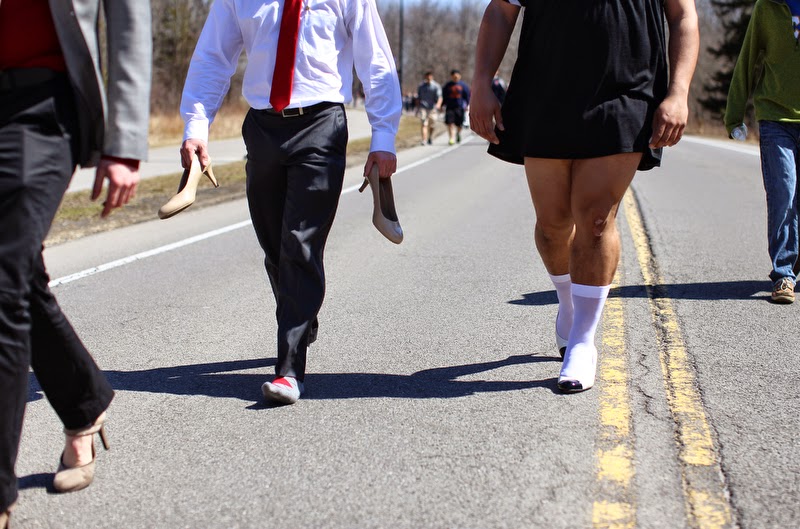
On Saturday I photographed a walk against domestic violence at RIT. The event was called Heel the Violence.  A lot of people made the walk in high heels and dresses.


Wednesday, March 19, 2014

Rochester BRAWL

Last Friday I photographed Rochester BRAWL, a women's arm wrestling event that raises money for various charities that benefit women's empowerment and health. In this case the event was benefitting Planned Parenthood and the RIT Center for Women and Gender.


Wednesday, March 5, 2014

Long Day at the Market

On Saturday I got up and to the market at 4am and was there until about 330pm photographing the Johnson family and friends selling fruit.


Final Game at the Frank Ritter Arena

On Saturday I got to photograph the last RIT men's hockey game at the Frank Ritter Arena. Next year the team will play in the Gene Polisseni Center that is currently being built about 500 yards away.


Wednesday, February 26, 2014

Unification 2014

On Saturday RIT held their annual Unification performance as a part of Freezefest. Unification is put on by RIT's global union. It is a series of performances from different cultural groups on campus. This is the second year I have had the pleasure of photographing this event for RIT's University News.


Wednesday, February 19, 2014

Environmental Portraits

I'm currently working on an environmental portrait assignment so this week I went down to R Bikes and also to Gallea's Greenhouse.


Wednesday, February 12, 2014

29th Annual Big Shot

RIT does an event called the Big Shot every year. People from the community come out and use flashlights and flashes to paint a building with light. This year we lit Rochester's High Falls. 


Polar Plunge 2014

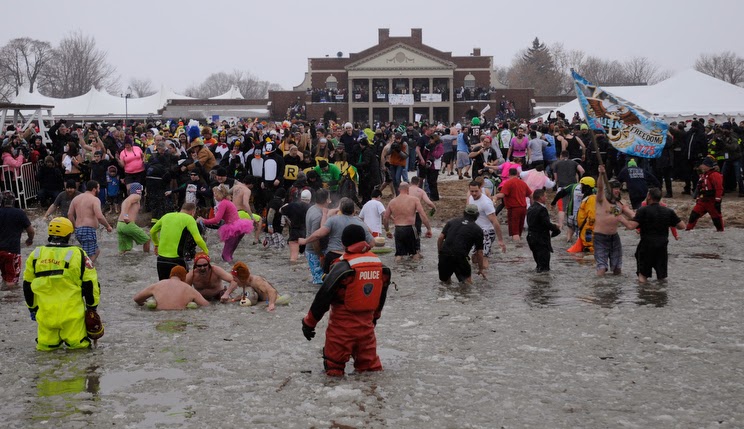
Sunday I went to Rochester's Polar Plunge for the second year in a row. Here's a couple of shots.


Friday, February 7, 2014

Mummers Parade

Every New Years Day Philadelphia hosts the Mummers Day Parade. It's a parade where performers dress up and play music and put on very elaborate performances all up and down Broad Street. 


Chip Fest

In December RIT hosted an 8 bit music concert called Chip Fest. Here's a shot of performer Danimal Cannon.


Brick City 5K

Back in October I shot a 5k so here's something from that.


Way Behind

Sorry I've been away from here for so long. Here are a few shots from DC.
Evan Vucci from AP during a meeting we had there.
 While staying in DC I walked past the capitol building every day multiple times.

Thursday, October 3, 2013

DC Trip: Summary

I have been home from DC for almost a week now. Looking back it was an amazing trip. Not many people get to go to a city and meet with this many top people in the industry. We met with wire services, newspapers and magazines, a radio station, the US Peace Institute, and the White House. We met with editors, photographers, and multimedia specialists. The trip provided us with information about a variety of different places to work as well as a variety of different jobs within those places.

Over the course of the week there were several common themes. One thing that was said at least once a day, most of the time more than that, was the importance of writing. We need to be able to write stories so that we can photograph them. We need to be able to write great, accurate captions. The importance of writing was stressed at almost every single place we went regardless of what medium they are producing the images for. The next common theme was networking. The field of photojournalism is a very small field. Everyone in the industry knows everyone. Because of this, a lot of the new hires are there because of word of mouth. In such a small field where reputation is everything, you can't afford to be anything but kind to everyone you meet. You never know who that person knows. The last common theme that I will talk about is the importance of personal work. Always be shooting and always be shooting for yourself. By shooting a story that you care about away from work you will keep photography from becoming monotonous. You will also improve your story telling and photographic skills, as well as making yourself more marketable. Shooting for yourself keeps your passion for photography alive.

My week in DC was an amazing experience. One that I would not trade for anything. I want to thank everyone that gave us their time and met with us, William Snyder and Jenn Poggi for setting up the trip, Mr. Donald Sims for letting me stay in his apartment all week, and all of my classmates that went with me for making the trip just as entertaining in the little downtime that we had as it was when we were meeting with people.

Friday, September 27, 2013

DC Trip: Day 5

Today was our last day in the city. We spent the morning going to the White House photo department and then to Reuters.

At Reuters we met with Larry Downing and Jason Reed. The two of them have been working together on multimedia pieces for the past couple of years. They talked to us about these projects and how helpful it is to be working with another person. By working together, Jason and Larry are able to do much more than they would do by themselves. In working together, however, they explained that the photographers ego has to go. For them it's "our work" never "my work." If someone asks who took a specific photo, a video clip, or audio clip used in their pieces most of the time the answer is "I don't know" because they work so much as a team that the individual makers of each segment doesn't matter. After showing us their work and explaining how they do it, Larry and Jason told us that in order to be successful and keep yourself relevant in the industry you have to be flexible. You have to be able to learn multimedia and writing and any other direction that the industry might go in in the future.

Unfortunately today marked the end of an amazing week. The biggest takeaways from the week are to always be networking and staying in touch with the people you meet, get better at writing, and always be shooting. Now time to catch a train back to Philly for the weekend.

Thursday, September 26, 2013

DC Trip: Day 4


Today we went to the Corcoran Gallery of Art, the McClatchy Tribune, National Geographic, and ended the day with an alumni party. 

At the Corcoran we saw their current exhibit on War Photography. The exhibit was great. The photographs were broken down into small sections, such as civilians in wartime, so that the exhibit was more than just hundreds of the most iconic war photographs ever made. The exhibit had pretty much every iconic war photograph ever made, be it Eddie Adam's execution of a vietcong or photos from Tim Hetherington's Restrepo. This exhibit is well worth a trip to see it.

Next we went to McClatchy Tribune. McClatchy is the second largest wire service in the US. It is made up of a network of about 55 different newspapers around the country that help to fund it. At McClatchy we met with senior photo editor, Linda Epstein. After explaining McClatchy to us, Linda gave us some pointers for our future. Just like everyone else we have talked to, Linda stressed the need to network and really keep in touch with the people that you have met. Another tip that she gave us was to always be looking at other peoples work. Draw inspiration from it and see what they're doing and how they're doing it. To really keep up with photography you have to be looking at what everyone around you is doing and be able to do that and more. 

After McClatchy we went over to National Geographic. At National Geographic we met with director of photography Sarah Leen, photo editor Bill Douthitt, and deputy director of photography Ken Geiger. The three of them started by telling us about where they see the National Geographic going. They explained that it is no longer just a magazine, but now it is a blog, a website, multimedia work, the magazine still, etc. After discussing the changing nature of the current industry, Ken and Bill discussed the importance of photo stories. Photo stories are how photographers change the world. They then went into discussing how important the research aspect of a story is. The stories that National Geographic tells require months to years of research before they can be photographed. The photographer needs to know every possible aspect of the story so that they can successfully pitch the story and then follow that up with some stellar photographs. Without solid research, a story will never be successfully told. 

After National Geographic we went to an alumni party and met with tons of alumni and friends of the program. Many of the people we have met throughout the week were at the party along with a ton of other photographers, editors, and other people in the industry. The party was an opportunity to talk with all of the knowledgeable people there in a less formal setting, ask plenty more questions, have work looked at, and most importantly practice the main theme of the week, networking. 
After another successful day the themes remain the same, network, write good captions, and always be working on a story. 

Wednesday, September 25, 2013

DC Trip: Day 3

Today was one of our longest days of the trip. During this long day we went to USA Today out in McLean, Virginia then back to DC for AARP then to the Associated Press then to a panel of photographers from different publications and freelancing.

We started at USA Today where we were scheduled to meet with Andrew Scott, the Deputy Director of Multimedia for the paper. When we got there we were greeted by not just Andrew, but a large group of employees including staff photographers Darr Beiser and Jack Gruber and photo editor Jym Wilson. The group gave us a bunch of advice mostly focused on story telling. One main theme that they all suggested was that we learn to write. By learning to write a story, we will understand what we need to shoot to tell the story visually. Another major theme was to make sure you are self assigning projects. Do personal work that will make you happy, but will also help you grow as a photographer and build a better portfolio.

Next we went over to AARP to meet with Photo Editors Michael Wichita and Lindsey Leger. Michael started off by explaining how the photo department at AARP worked. He runs the two publications, the bulletin and the magazine, with almost entirely freelance work. Michael finds freelancers by figuring out what story he is working on, then looks for a photographer that is working on a story similar or has interests in the topic that he is publishing. He then uses his funds to hire them as a freelancer to try and help fund their work on the project. Michael also explained AARP's new uses of social media. He recently has started using Instagram to publish photo stories.

After AARP we went over to the Associated Press to meet with assistant chief of the bureau of photos, David Ake, and staff photographers Evan Vucci and Jacquelyn Martin. David gave us a list of things that are vital to becoming a successful photographer. The first thing on the list was longevity. He estimated that it takes at least five years to make it as a photographer and many photographers won't stick around that long. The next thing was don't be a jerk. The photography industry is incredibly small so if you are a jerk people will hear about it and no one wants to work with a jerk. The next tip was to keep in touch. Make contacts and keep in touch with them. One email a month to people is enough to keep them in the loop and remind them that you are around, so they will keep you in mind for possible work recommendations. Lastly, he told us to always have our gear on us. Always have it with you so that you can always be shooting and really perfecting the technical aspects of photography so that you don't have to worry about them in the long run. Evan and Jacquelyn then gave us some tips. They stressed how important doing personal work was to not only improve your craft but really to keep you sane and interested in photography at times when work seems to be getting monotonous.

After AP we met with a number of different photographers from different backgrounds. First Jim Lo Scalzo of the European Photo Agency spoke. Jim's biggest point was to always be working on stories and pitching stories to editors. Stories are the most important thing in your career. Not only are stories what you will look back on and be proud of, but being a good story teller will help to get photography and visual story telling to be more respected by other members in the news industry. After Jim spoke, Mary Calvert, a freelancer out of DC, took the floor to speak to us. Mary told us how she comes up with ideas for stories, something that many of us, especially me, struggle with. She said that reading the newspaper should spark a dozen ideas just in the first section. Another place that she suggested for story inspiration was listening to NPR. Any source of news reporting should help to bring up a large number of ideas for stories. After Mary, Jahi Chikwendiu, staff photographer at the Washington Post, spoke. Jahi showed us his award winning portfolio and described his career path. He told us that no matter what we do, make sure to put 100 percent passion into it. Without putting all of your heart into what you do, you will not live up to your potential. After Jahi, Lucian Perkins, a freelancer in the Wahington DC area, spoke. He showed us the project he is working on about Joseph's House, a house that is a sort of hospice for people with HIV. Lucian talked about how he shot everything from the story, 7 terabytes of video, without watching it. He said that now that he is going through he's realizing how much more he would have learned and improved had he watched it sooner so that he wasn't making the same mistakes the whole time. After Lucian, Spencer Millsap, a National Geographic multimedia editor, spoke to us. Spencer described how the internet and tablets are changing how Nat Geo is setting up their website. They are trying to make it much more interactive with a lot more multimedia. Spencer also showed a some of his work and what it's like to work at Nat Geo with some of the biggest names in the industry.

Overall the main takeaways from today are that personal work is the most important thing a photographer can do, and like the previous two days, always be networking.